INTRAVENOUS TACROLIMUS AS A TEMPORARY ALTERNATIVE IN KIDNEY TRANSPLASNTATION: EXPERIENCE IN TWO PATIENTS.


Certificate Output Instructions

For best output, select "Paper Size" as "A4" and "Margin" as "0" or "None".

To save or print to PDF, please select Print Destination > Save as PDF, enable Background Graphics under "More Settings", then click "Save".


Certificate Background


Presented the abstract " "
(Abstract co-author(s):  )


E-Poster Presentation

During the congress, E-Posters will be accessible to all participants on the congress website 24/7, as well as in the E-poster stations in the congress center. 

Preparing your E-Poster

Please review the E-Poster format requirements carefully when preparing your E-Poster. Should your E-Poster not meet the mentioned requirements, it may not be displayed as described above.

​E-Poster Submission Deadline

Please prepare and upload your E-Poster no later than March 14, 2026 11.59PM CET. After this date, you will no longer be able to prepare and upload your E-poster and it will not be displayed and accessible on the congress website.​

E-Poster Format Requirements
  • PDF file
  • Layout: Portrait (vertical orientation)
  • One page only (Dim A4: 210 x 297mm or PPT)
  • E-Poster can be prepared in PowerPoint (one (1) PowerPoint slide) but must be saved and submitted as PDF file.
  • File Size: Maximum file size is 2 Megabytes (2 MB)
  • No hyperlinks, animated images, animations, and slide transitions
  • Language: English
  • Include your abstract number
  • E-posters can include QR codes, tables and photos
 
INTRAVENOUS TACROLIMUS AS A TEMPORARY ALTERNATIVE IN KIDNEY TRANSPLASNTATION: EXPERIENCE IN TWO PATIENTS.

Please follow the instructions below to input your abstract title.

Abstract titles should be brief and reflect the content of the abstract.

  • The title will not be accepted if it exceeds 25 words.
  • Type in CAPITAL LETTERS.
  • Lowercase may be used for abbreviations only, for example, mRNA.
Elizabeth de la Concepción
Pérez Vallejos
Elizabeth de la Concepción Pérez Vallejos elizabethpv15@gmail.com Hospital Antonio Lenin Fonseca Nefrología Managua Nicaragua *
Leopoldo Gustavo Ardiles leopoldoardiles@gmail.com Hospital Base de Valdivia Nefrologia Valdivia Chile -
Paola krall Opazo paola.krall@uchile.cl Universidad de Chile Biochemist Santiago Chile -
-
-
-
-
-
-
-
-
-
-
-
-

Tacrolimus is a key immunosuppressive agent in kidney transplantation, significantly reducing the risk of acute rejection. However, oral administration may be temporarily contraindicated in cases of gastrointestinal complications, postoperative ileus, or perforation. Intravenous (IV) tacrolimus provides a transitional route, but dosing, monitoring, and conversion to oral therapy are challenging. Here, we report two clinical cases illustrating the use of IV tacrolimus in kidney transplant recipients

Study Design and Patients: This is a descriptive report of two adult renal transplant recipients who required IV tacrolimus due to temporary inability to receive oral therapy. Patients were selected based on clinical indications, including postoperative ileus or intestinal perforation. Demographic, clinical, immunologic, and pharmacogenetic (CYP3A5) data were collected.


Immunosuppression Protocol: Both patients received basiliximab induction. Maintenance immunosuppression included tacrolimus, mycophenolate, and corticosteroids. IV tacrolimus was initiated when oral administration was temporarily contraindicated.


Intravenous Tacrolimus Administration: Tacrolimus was prepared by diluting 5 mg/mL ampoules in 500 mL of 5% dextrose or 0.9% saline and administered via continuous 24-hour infusion using non-PVC sets. Dose was individualized according to body weight, clinical status, and CYP3A5 genotype (recommended range 0.03–0.05 mg/kg/day). IV therapy lasted 7–9 days, after which patients were converted back to oral therapy (IV:oral conversion ratio 1:4 to 1:5).


Therapeutic Drug Monitoring: Tacrolimus trough levels were measured every 24 hours during IV therapy and for 24 hours after initiation of oral therapy. Dose adjustments were guided by serum levels.


Clinical and Laboratory Follow-up:Renal function, BK virus, and CMV were monitored monthly for one year post-transplant. Donor-specific antibodies (DSA) and panel reactive antibodies (PRA) were measured at 1, 3, and 6 months.

Case Reports

Case1
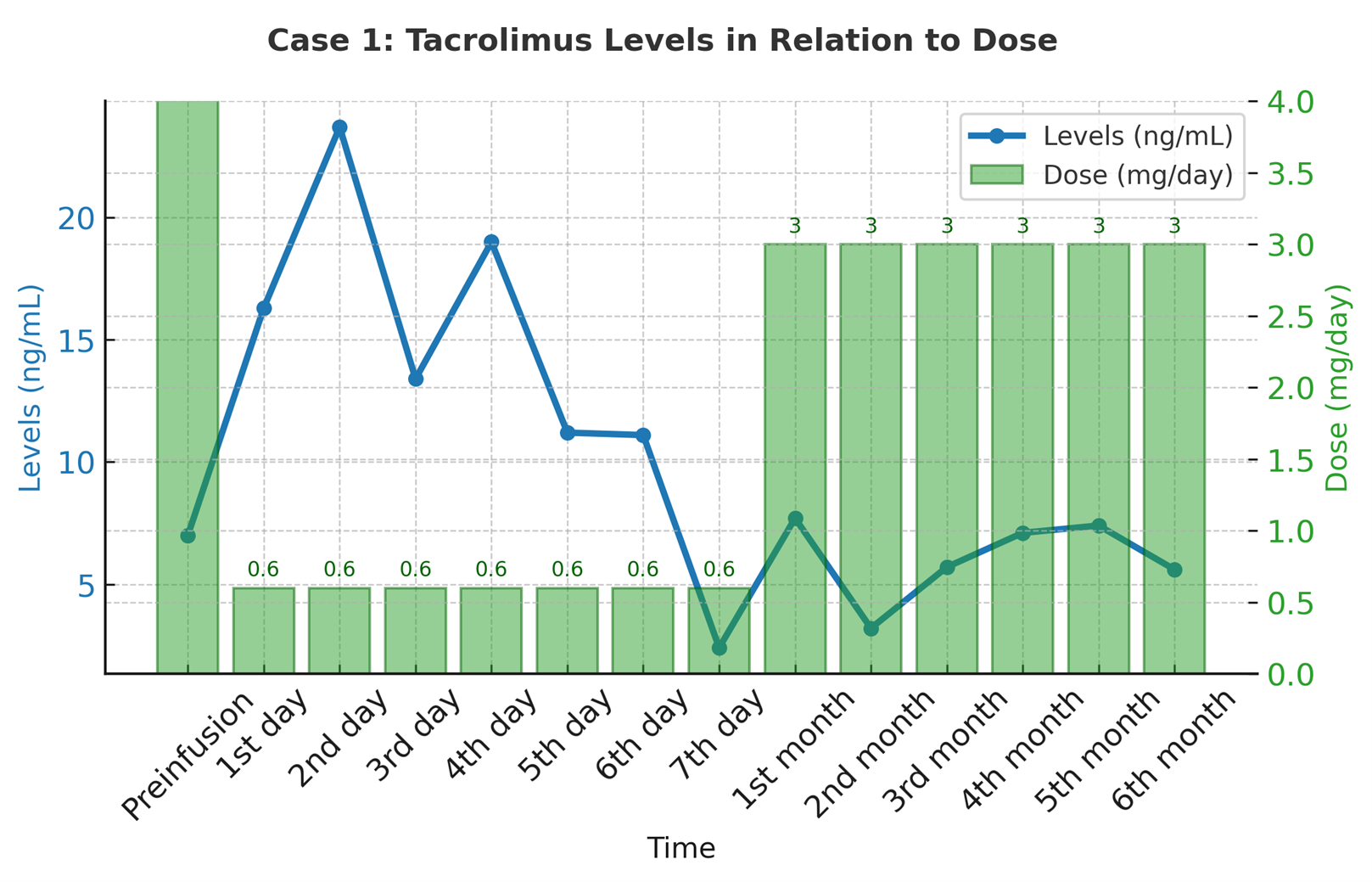
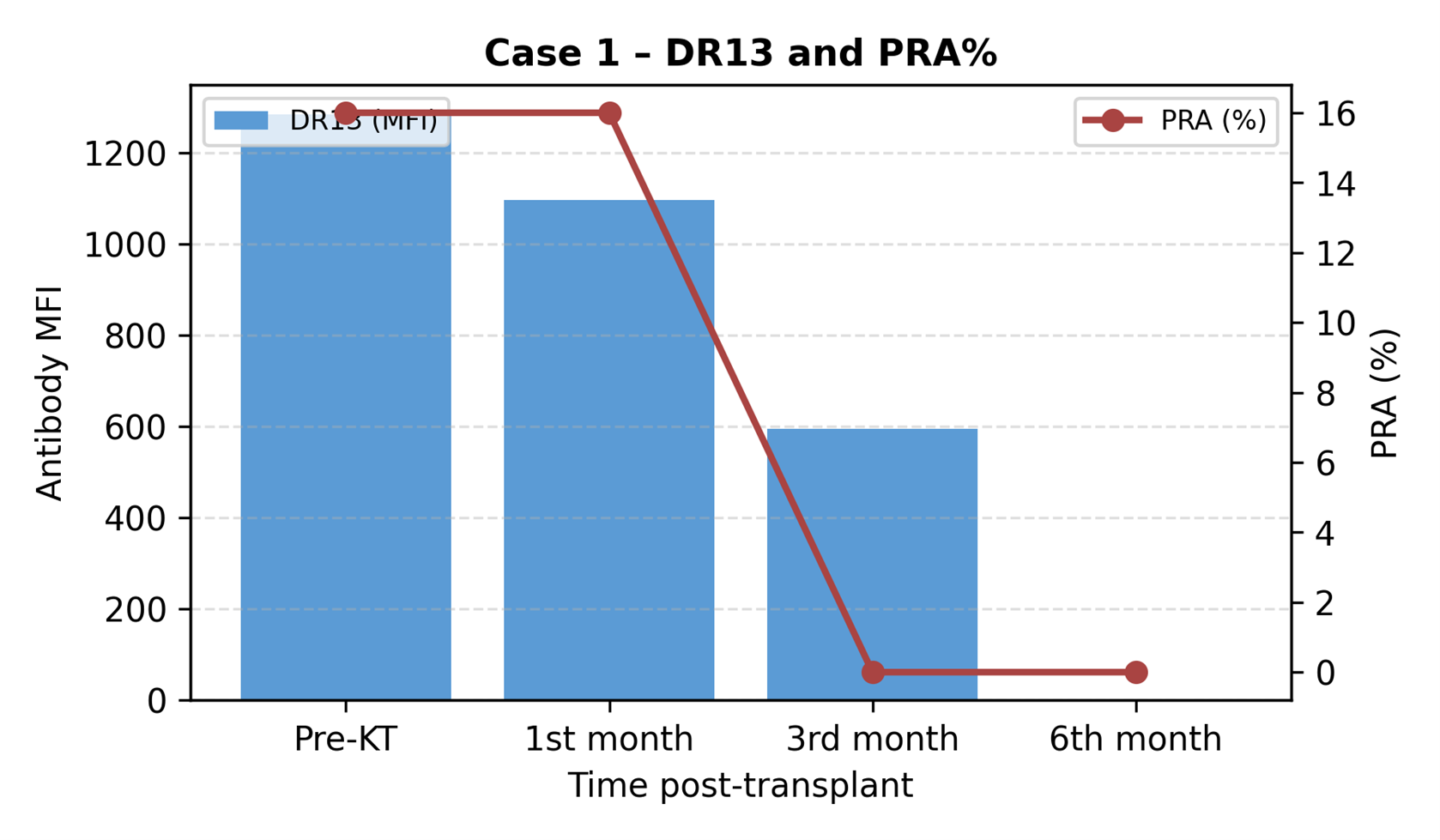
A 58-year-old male with ESRD secondary to autosomal dominant polycystic kidney disease and CYP3A5 *3/*3 genotype received a deceased donor kidney transplant (PRA 16%, anti-DR13 antibodies, KDPI 2%) with basiliximab induction. On post-transplant day 15, IV tacrolimus (0.6 mg/24 h) was initiated due to postoperative ileus following intestinal resection.


Figure 1: Tacrolimus serum levels over 7 days. Despite constant IV dosing, trough levels fluctuated between 11.2 and 23.7 ng/mL, reflecting slow metabolizer status.

Case2
A 56-year-old male with ESRD of unknown etiology, CYP3A5 *1/3 genotype, received a deceased donor kidney transplant from expanded criteria donor (KDPI 64%, PRA 16%, anti-DR12 and DR52 antibodies) with basiliximab induction. IV tacrolimus (1.5–1.8 mg/24 h) was required for 9 days due to intestinal perforation.


Figure 2: Tacrolimus serum levels over 9 days. Trough levels remained stable between 5.0 and 5.6 ng/mL.
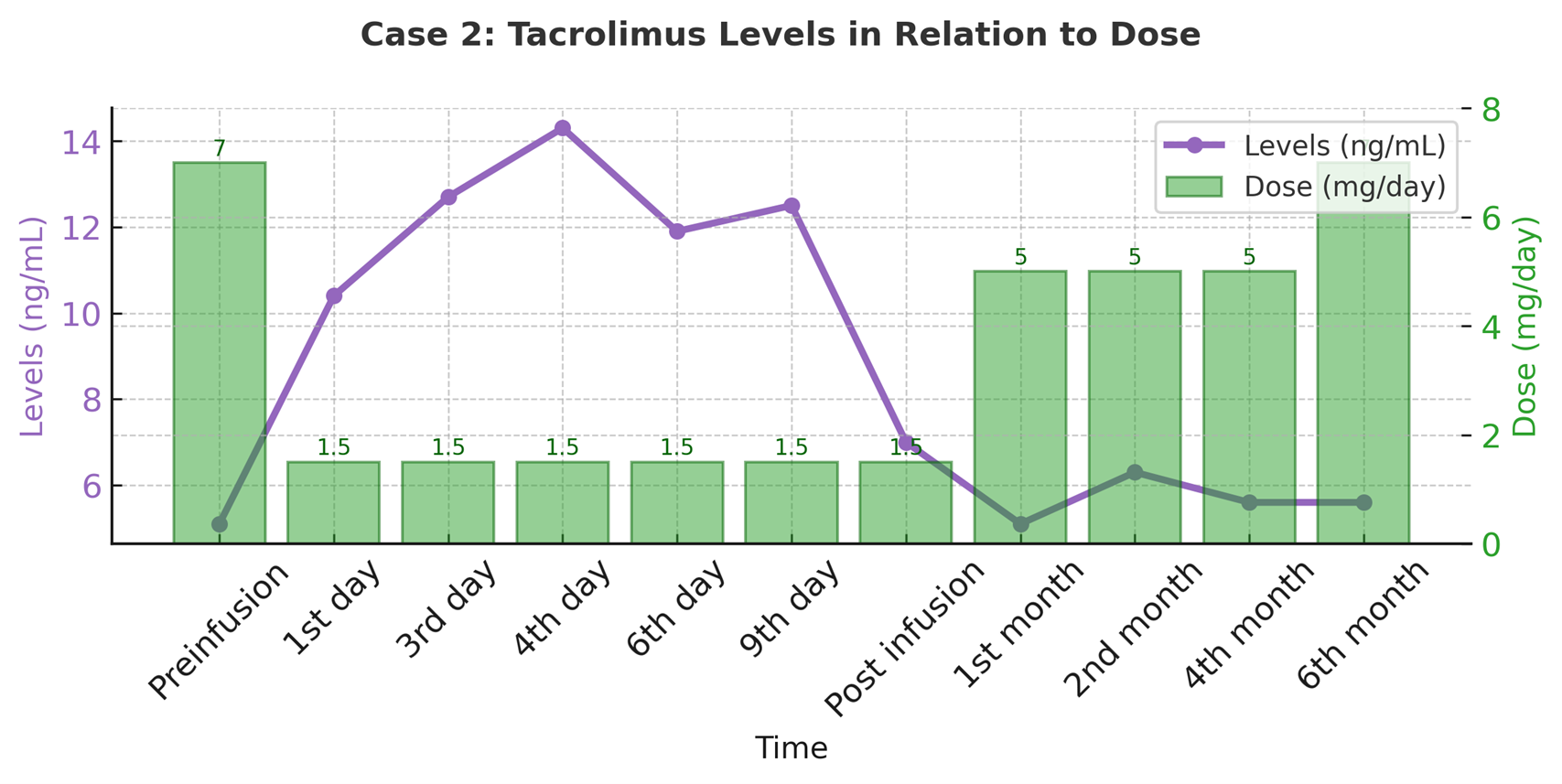
 

Figure 3: This figure shows the progression of serum creatinine levels in two transplant cases over time, highlighting improvement post-transplant.
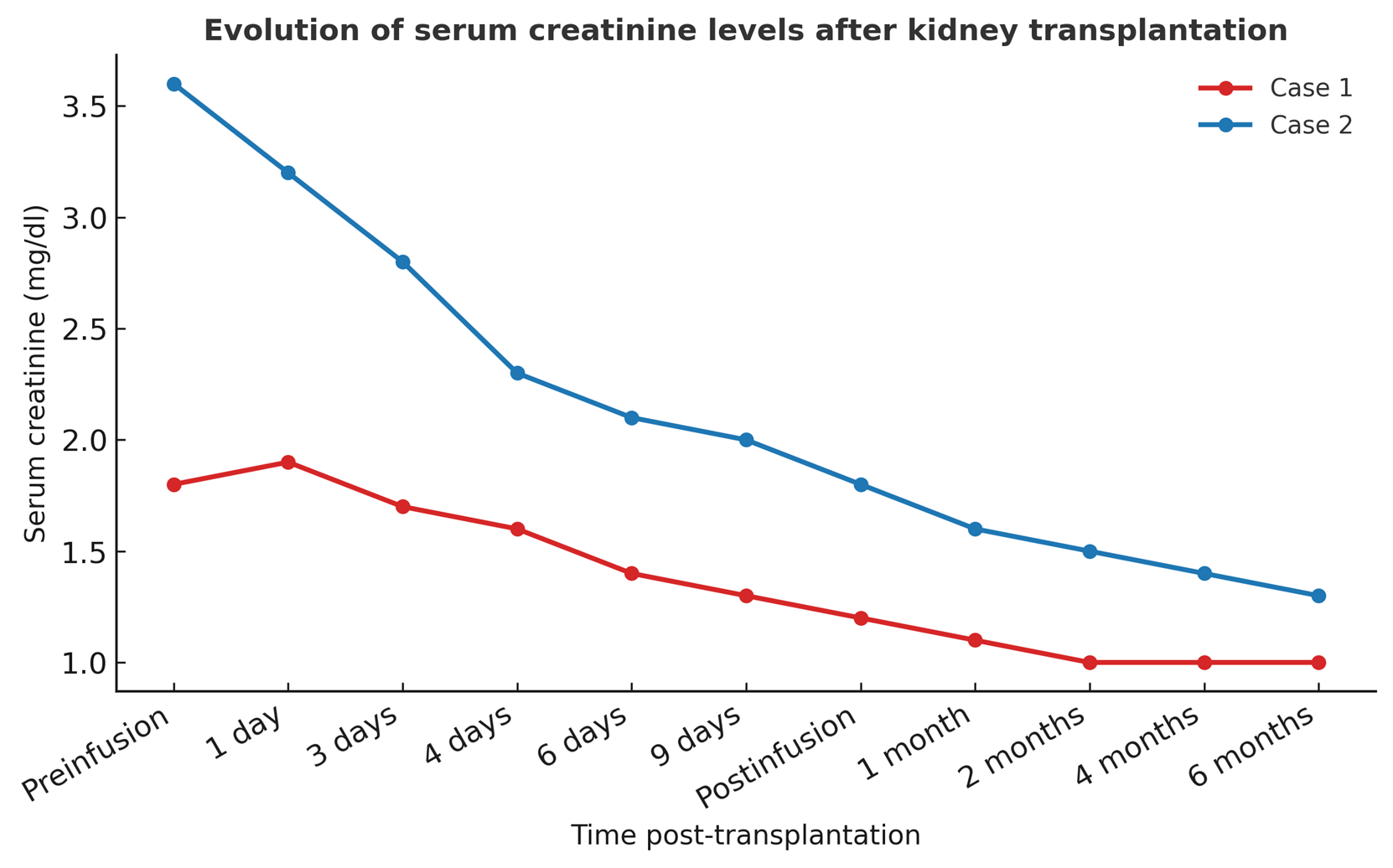

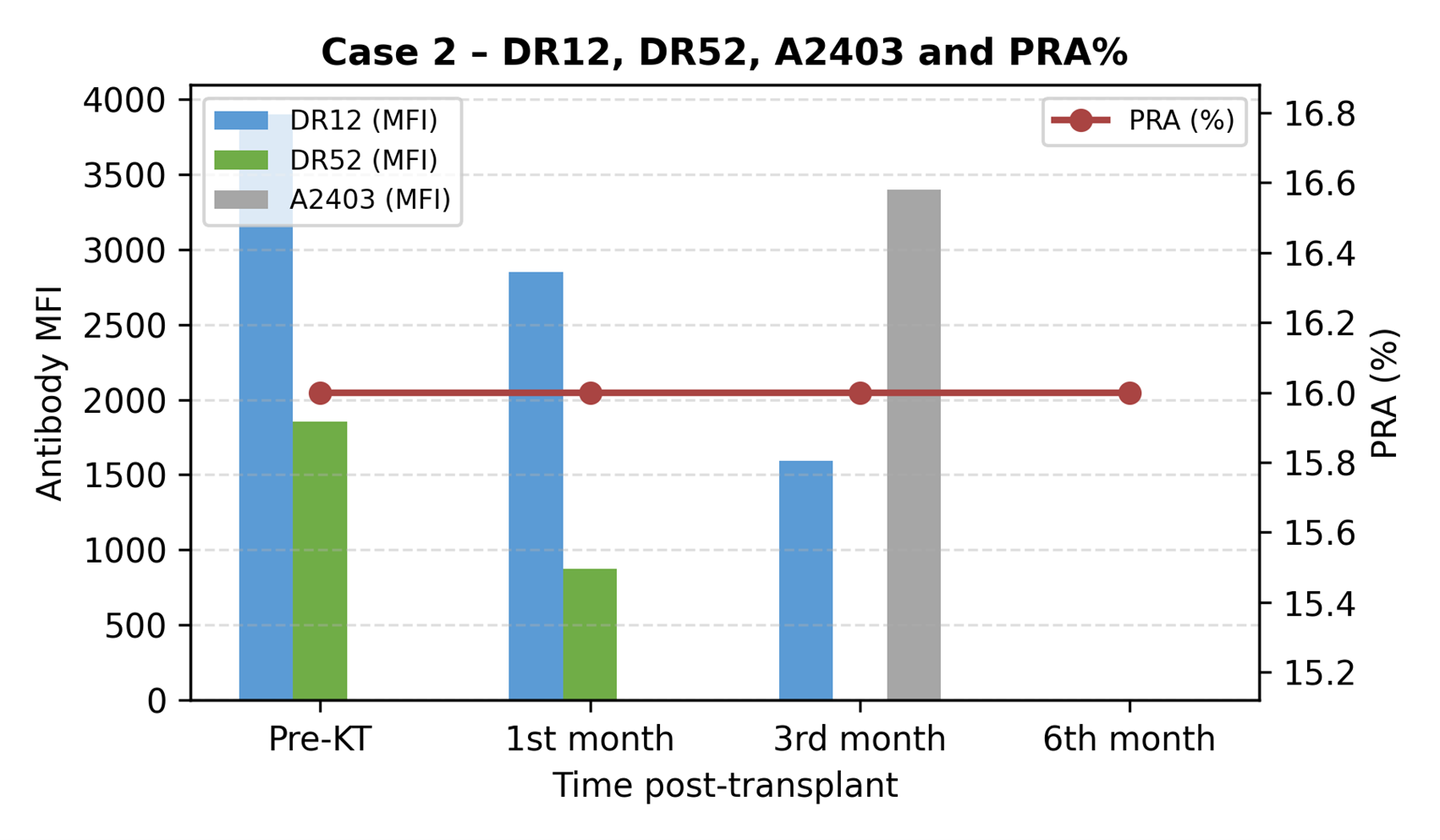
Figure 4:  PRA and DSA evolution for both cases over 6 months post-transplant.

Case 1: PRA and DR13 negativity at 6 months. Case 2: reduction of DR12 and DR 52, but appearance of de novo anti-HLA, no ADEs.

Discussion

IV tacrolimus provides an effective transitional route when oral administration is not feasible. Continuous infusion over 24 hours, with individualized dosing based on body weight and pharmacogenetic profile, allows for stable serum levels. CYP3A5 genotype strongly influences metabolism: slow metabolizers (*3/*3) show higher variability (Case 1), whereas intermediate metabolizers (*1/*3) maintain consistent trough levels (Case 2).

Ninguno de los pacientes experimentó reacciones de hipersensibilidad, a pesar de la duración de la infusión excedió los siete días recomendados. Esta constatación es pertinente, teniendo en cuenta que los excipientes de tacrolimus intravenoso (aceite de ricino hidrogenado/polioxietileno) puede inducir anafilaxia.

A pesar del difícil control de los niveles de tacrolimus en relación con el dosis prescrita, la función del injerto fue favorable incluso para el caso 2, que presentó retraso en la función del injerto y soporte de hemodiálisis requerido la primera semana postrasplante, una condición esperada porque era un criterio ampliado Trasplante, a los seis meses después del trasplante con creatinina delta de 0,5 mg/dl entre ambos casos (1,0 mg/dl vs 1,5 mg/dl).

La monitorización de los virus BK y CMV es esencial para el seguimiento post-trasplante, debido a la exposición a la inmunosupresión, lo que favorece el desarrollo de infecciones oportunistas. Aunque la recomendación para el virus BK/JC y CMV El seguimiento se realizará a los 1, 3, 6, 9 y 12 meses, en nuestro centro es realizado mensualmente hasta el primer año después del trasplante, debido a la experiencia que muchos pacientes desarrollan este tipo de infección incluso recibiendo profilaxis (en el caso del CMV). El paciente del caso 1, que estuvo expuesto a dosis más bajas de inmunosupresión, permaneció con BK/JC y CMV indetectables; Por el contrario, el paciente en el caso 2 presentó <500 copias/ml de CMV sin requerir más que la vigilancia

IV tacrolimus is a safe and effective temporary alternative in kidney transplant recipients unable to take oral medication. Individualized dosing, pharmacogenetic considerations, and close monitoring are key to optimizing outcomes and preventing toxicity.

Kewords