ANURIA FOLLOWING LEFT RENAL VEIN LIGATION IN A LONE KIDNEY: A SURGICAL MYTH IS VIGOROUSLY CHALLENGED - AN EVOLVING CASE REPORT FROM SEPTEMBER 2025


Certificate Output Instructions

For best output, select "Paper Size" as "A4" and "Margin" as "0" or "None".

To save or print to PDF, please select Print Destination > Save as PDF, enable Background Graphics under "More Settings", then click "Save".


Certificate Background


Presented the abstract " "
(Abstract co-author(s):  )


E-Poster Presentation

During the congress, E-Posters will be accessible to all participants on the congress website 24/7, as well as in the E-poster stations in the congress center. 

Preparing your E-Poster

Please review the E-Poster format requirements carefully when preparing your E-Poster. Should your E-Poster not meet the mentioned requirements, it may not be displayed as described above.

​E-Poster Submission Deadline

Please prepare and upload your E-Poster no later than March 14, 2026 11.59PM CET. After this date, you will no longer be able to prepare and upload your E-poster and it will not be displayed and accessible on the congress website.​

E-Poster Format Requirements
  • PDF file
  • Layout: Portrait (vertical orientation)
  • One page only (Dim A4: 210 x 297mm or PPT)
  • E-Poster can be prepared in PowerPoint (one (1) PowerPoint slide) but must be saved and submitted as PDF file.
  • File Size: Maximum file size is 2 Megabytes (2 MB)
  • No hyperlinks, animated images, animations, and slide transitions
  • Language: English
  • Include your abstract number
  • E-posters can include QR codes, tables and photos
https://storage.unitedwebnetwork.com/files/1099/6b8b2d539baf8e4fb13462a5f4bb752d.pdf
ANURIA FOLLOWING LEFT RENAL VEIN LIGATION IN A LONE KIDNEY: A SURGICAL MYTH IS VIGOROUSLY CHALLENGED - AN EVOLVING CASE REPORT FROM SEPTEMBER 2025

Please follow the instructions below to input your abstract title.

Abstract titles should be brief and reflect the content of the abstract.

  • The title will not be accepted if it exceeds 25 words.
  • Type in CAPITAL LETTERS.
  • Lowercase may be used for abbreviations only, for example, mRNA.
Macaulay
Onuigbo
Macaulay Onuigbo macaulay.onuigbo@uvmhealth.org University of Vermont, Robert Larner, M.D. College of Medicine, Burlington, VT Medicine Burlington United States *
Oni Balonfentse oni.balonfentse@uvmhealth.org University of Vermont, Robert Larner, M.D. College of Medicine, Burlington, VT Medicine Burlington United States -
-
-
-
-
-
-
-
-
-
-
-
-
-

Over the past several decades, experience and consensus had been built around the concept that elective left renal vein ligation that is sometimes performed intraoperatively to improve surgical exposure was innocuous and a safe procedure. Left renal vein ligation is useful as a technical aid to gain exposure to the perirenal aorta, and to control bleeding, and in most cases in history, left renal vein ligation is considered to be well tolerated. This surgical myth is primarily based on the basis that collateral venous pathways draining the left kidney persevere and therefore often preserve left kidney function following the left renal vein ligation, with described outcomes ranging from mild reversible transient renal dysfunction to no impact on renal function. Nevertheless, there have been a few reports of transient renal failure and rarely, irreversible renal failure with end stage renal disease requiring permanent renal replacement therapy. It would appear that the majority of the described cases in the surgical literature that supported this surgical myth of safety of this procedure were in patients with two functional kidneys, pre-operatively, and more so, in patients who had associated progressive inferior vena caval obstruction that had invariably led to the development of extensive left renal vein collaterals that were then able to post-operatively, take up the slack to promptly and effectively drain the left kidney after the left renal vein was ligated. Clearly, such considerations and innuendos would not apply to a patient with pre-operative solitary single functioning left kidney, and less so in a patient without pre-existing inferior vena caval obstruction who therefore would not have developed an elaborate left renal vein collateral circulation. In September 2025, we encountered a 55-yo woman with a single left kidney who developed anuria hours following elective left renal vein ligation. 

Case Report

A 55-year-old woman with past medical history for type 2 diabetes mellitus on insulin, hypertension, current smoker, prior multiple non-diagnostic imaging-guided needle aspiration biopsies of a periaortic lymph node, past right robot-assisted laparoscopic nephroureterectomy for urothelial carcinoma in late 2020 for a large renal mass, previous cholecystectomy, partial left mastectomy for breast cancer, underwent open retroperitoneal lymph node biopsy. There remained concerns for metastatic urothelial carcinoma. Outpatient medications included Dapagliflozin 10 mg daily, insulin, glipizide 20 mg daily, Losartan 25 mg daily, Prazosin 1 mg at bedtime and Dulaglutide 0.75 mg subcutaneous, weekly.

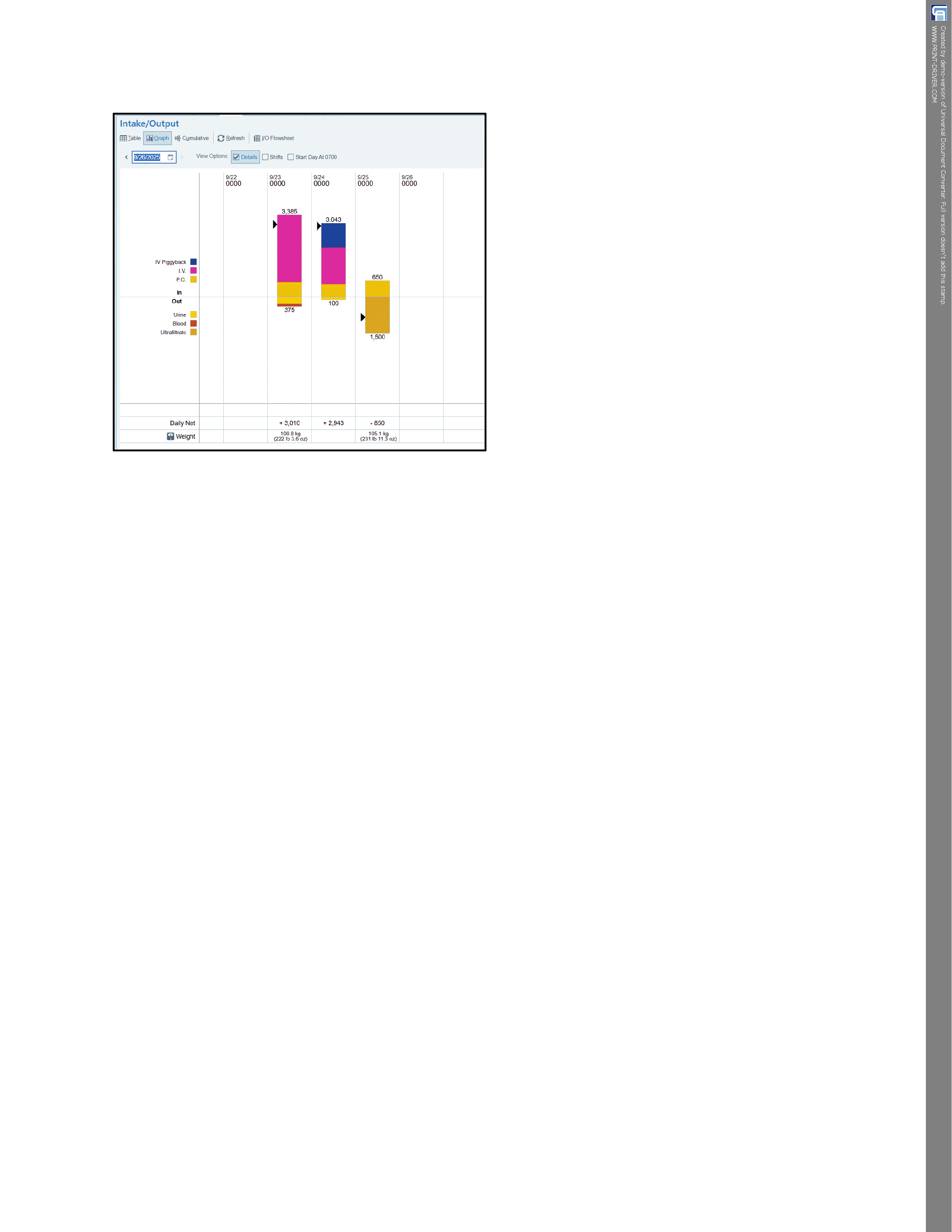
During the open periaortic lymph node biopsy, the left renal vein was ligated to mobilize the inferior vena cava. The aortocaval lymphadenopathy immediately inferior to the left renal vein corresponding to preoperative imaging was removed. Estimated blood loss was 100 mL and urine output during the surgery was 125 mL. No complications were reported during the procedure, and the patient tolerated the procedure well and post-operatively was in hemodynamically stable condition, with a Foley catheter until ambulatory, and she quickly transitioned to clear liquid diet. The preoperative creatinine was 1.3 mg/dL. Despite stable vital signs, by postoperative day 1, serum creatinine had almost tripled and quickly rose to 3.71 mg/dL (FIGURE 1). Creatinine subsequently continued to increase, accompanied by anuria (FIGURES 1 & 2). Nephrology was quickly consulted on post-operative day 1. At this point, she was suspected of having irreversible loss of renal function. A urine bladder scan that morning on post-operative day 1 revealed zero urine and the Foley catheter was empty. Except for post-operative abdominal pain, she had no systemic symptoms, no fever or chills, no nausea or vomiting but no urine output. Physical examination was normal except for post-op abdominal status. She had no peripheral edema. A tunneled hemodialysis catheter was promptly placed on postoperative day 1 and she had her first hemodialysis treatment on postoperative day 2. 
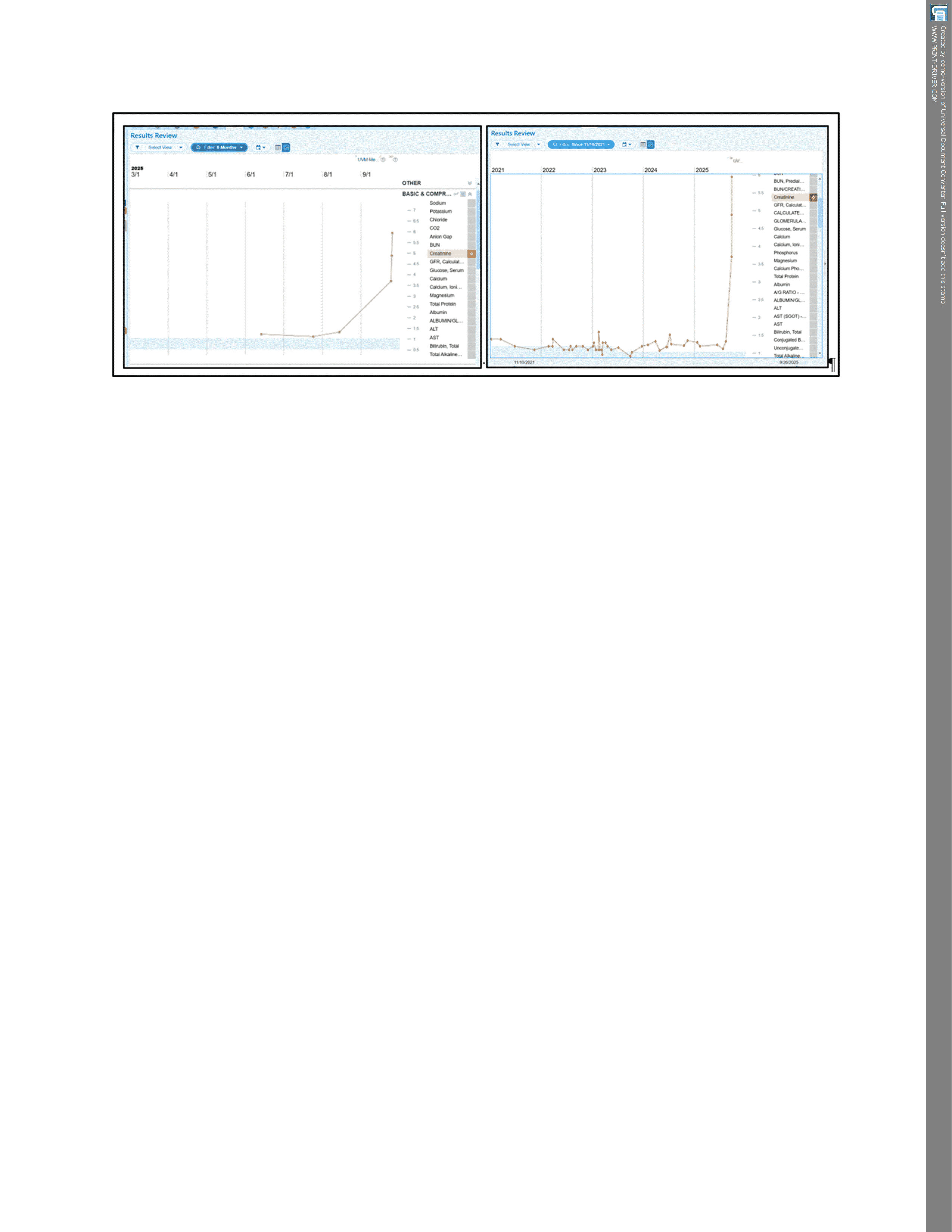
Rapidly rising serum creatinine trajectory following the open periaortic lymph node biopsy.


Anuria was evident on post-operative day 1 despite significant intravenous fluid infusions

At the same time, a renal ultrasound examination with renal artery and vein Duplex was completed on post-operative day 1 to assess the renal vascular anatomy and physiology. Left kidney size before nephrectomy in early 2022 by ultrasound measured 13.4 cm in length. This time around, the left kidney measured 15 cm and Duplex exam showed no evidence for renal artery stenosis (FIGURE 3). Proximal left renal peak systolic velocity in early 2022 was 275 cm/s whereas proximal left renal artery peak systolic velocity this time around was reduced to 115 cm/s. The left renal vein was visualized distally and was widely patent (FIGURE 3). 
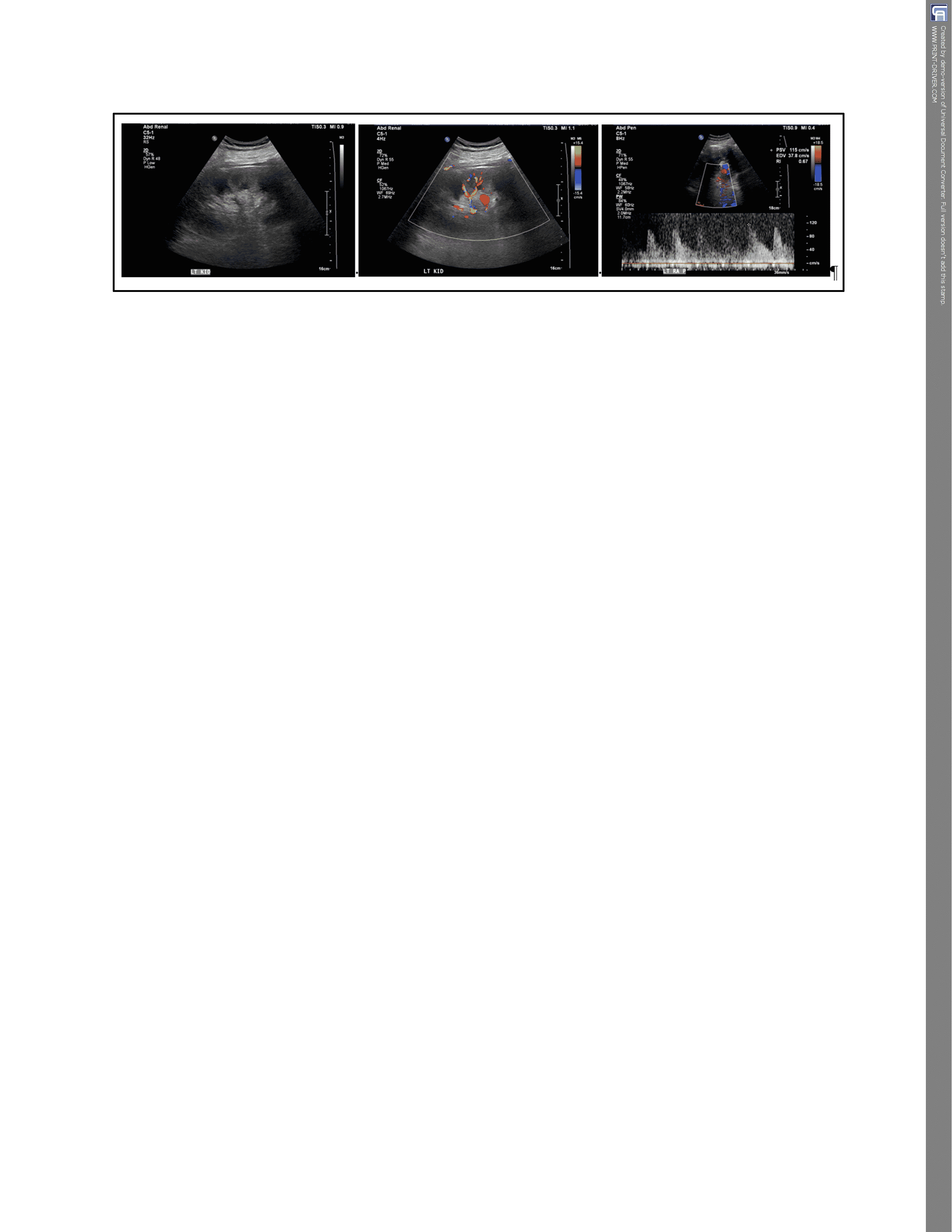
Left renal sonogram and left renal artery and vein Duplex examination on post-operative day 1.

With renewed production of urine on post-operative day 3, urinalysis by dipstick revealed clear yellow urine with SG 1.014, pH 5.5, 2+ blood, 3+ proteinuria, negative glucose, 4-9 WBC/HPF, 3-10 RBC, no bacteria and <10 casts/HPF. There were a few renal epithelial cells on urine deposit microscopy. 

She received alternate daily hemodialysis treatments for persistent oligo-anuria. Serum creatinine peaked at 6.2 mg/dL o post-operative day 4 (FIGURE 4). In total, she received 3 hemodialysis treatments. Serum creatinine and BUN were simply returning back upwards between the alternate daily 3-hr hemodialysis treatments. (FIGURE 4). The third and the last hemodialysis treatment was on post-operative day 6. By the next day, she was making a lot more urine and she was therefore discharged home after 8 days in the hospital, on postoperative day 7, with close monitoring. She never needed additional renal replacement therapy. Indeed, serum creatinine had started to decrease spontaneously, without the need for more hemodialysis (FIGURE 4). Hyperphosphatemia has since normalized.
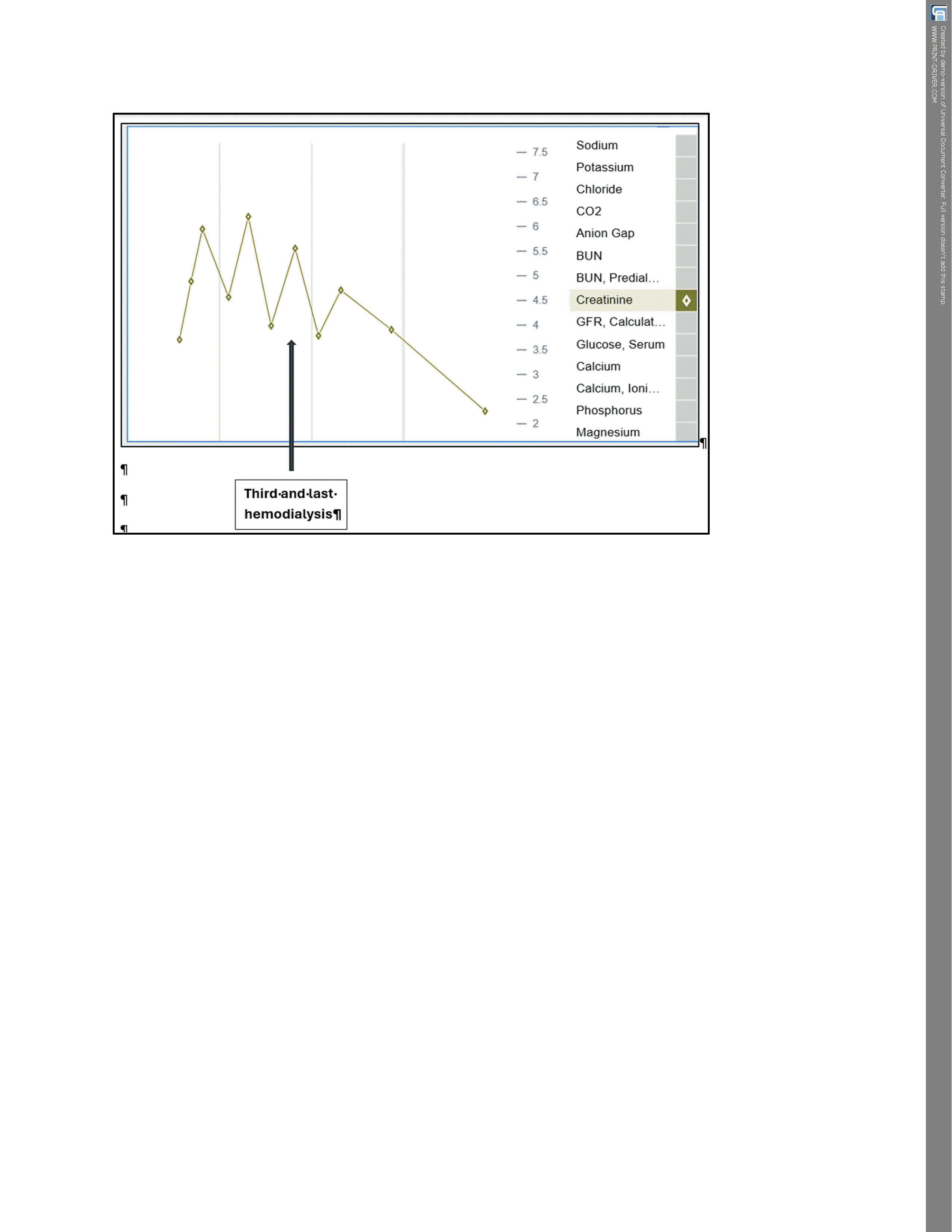


Case reports and case series describe variable outcomes following left renal vein ligation. Some patients hardly experienced any significant change in renal function, others quickly recovered renal function through collateral venous drainage while others progressed to irreversible renal failure. Even in patients with two kidneys, some reports had demonstrated increased risk of postoperative azotemia: in one review of 332 abdominal aortic aneurysm repairs, 9 of 13 patients with left renal vein ligation developed significant creatinine rises compared to 21 of 319 without ligation. In solitary kidney patients, the absence of collateral outflow makes ligation particularly dangerous and irreversible renal loss and need for permanent dialysis have been described. Recent studies continue to highlight the variability of renal tolerance and emphasize cautious, individualized operative planning regarding the practice of pre-emptive left renal vein ligation performed intraoperatively to improve surgical exposure and to control bleeding.