CASE OF SEVERE HYPERCALCEMIA DUE TO PARATHYROID ADENOMA IN A YOUNG FEMALE PRESENTING WITH ACUTE PANCREATITIS AND ACUTE KIDNEY INJURY- CASE REPORT.


Certificate Output Instructions

For best output, select "Paper Size" as "A4" and "Margin" as "0" or "None".

To save or print to PDF, please select Print Destination > Save as PDF, enable Background Graphics under "More Settings", then click "Save".


Certificate Background


Presented the abstract " "
(Abstract co-author(s):  )


E-Poster Presentation

During the congress, E-Posters will be accessible to all participants on the congress website 24/7, as well as in the E-poster stations in the congress center. 

Preparing your E-Poster

Please review the E-Poster format requirements carefully when preparing your E-Poster. Should your E-Poster not meet the mentioned requirements, it may not be displayed as described above.

​E-Poster Submission Deadline

Please prepare and upload your E-Poster no later than March 14, 2026 11.59PM CET. After this date, you will no longer be able to prepare and upload your E-poster and it will not be displayed and accessible on the congress website.​

E-Poster Format Requirements
  • PDF file
  • Layout: Portrait (vertical orientation)
  • One page only (Dim A4: 210 x 297mm or PPT)
  • E-Poster can be prepared in PowerPoint (one (1) PowerPoint slide) but must be saved and submitted as PDF file.
  • File Size: Maximum file size is 2 Megabytes (2 MB)
  • No hyperlinks, animated images, animations, and slide transitions
  • Language: English
  • Include your abstract number
  • E-posters can include QR codes, tables and photos
https://storage.unitedwebnetwork.com/files/1099/2f35a1e9e3a8c833d341e199a5eed655.pdf
CASE OF SEVERE HYPERCALCEMIA DUE TO PARATHYROID ADENOMA IN A YOUNG FEMALE PRESENTING WITH ACUTE PANCREATITIS AND ACUTE KIDNEY INJURY- CASE REPORT.

Please follow the instructions below to input your abstract title.

Abstract titles should be brief and reflect the content of the abstract.

  • The title will not be accepted if it exceeds 25 words.
  • Type in CAPITAL LETTERS.
  • Lowercase may be used for abbreviations only, for example, mRNA.
SYED MOHD. AZHAR
HASSAN
SYED MOHD. AZHAR HASSAN dr.azhar_hassan@yahoo.co.in DECCAN COLLEGE OF MEDICAL SCIENCES NEPHROLOGY HYDERABAD India *
SANIYA SADATH saniya.sadat@gmail.com DECCAN COLLEGE OF MEDICAL SCIENCES NEPHROLOGY HYDERABAD India -
-
-
-
-
-
-
-
-
-
-
-
-
-

Primary hyperparathyroidism (PHPT) is characterized by hypercalcemia with elevated levels of parathyroid hormone (PTH){1}. It is usually seen in females above the age of 50 years, with a prevalence of 21/1,000 in Europe{2}. The prevalence of the condition in the United States has been estimated at 23 cases per 10,000 women and 8.5 per 10,000 men{3}. Parathyroid adenoma is the underlying cause in 85% of patients with Primary Hyperparathyroidism(PHPT); multiple-gland hyperplasia accounted for approximately 6–10% of cases; however, parathyroid malignancies are rare, occurring in <0.5% of all cases. The clinical profile of PHPT is usually variable. Patients may present with a classic skeletal disease, recurrent nephrolithiasis, or be asymptomatic, detected on routine biochemical screening. In developing countries, they usually present with overt manifestations. Data collected from the Indian PHPT registry between July 2005 and June 2015 recorded a total of 464 subjects (137 men and 327 women) with histopathological proven PHPT. The mean age of patients was 41 ± 14 years with a female: male ratio of 2.4:1. The majority (95%) of patients were symptomatic. Common clinical manifestations were weakness and fatigability (58.7%), bone pain (56%), and renal stone disease (31%). Pancreatitis was a rare presentation, occurring in only 12.3% of the patients{4}. Primary hyperparathyroidism due to parathyroid adenoma presenting as pancreatitis is rare. Its prevalence in the literature ranges from 1.5 to 13%{5}. Acute pancreatitis is a rare presentation of primary hyperparathyroidism with incidence rates of 1.5 and 7%{6}.

To report a case of 30years female patient born by consanguinity, married since13years, delivered 2 children (2013 and 2015) by caesarean section with tubectomy done in last delivery. She underwent surgery for pilonidal sinus in 2019 and had nil comorbidities. Her mother died due to complications of renal failure. She presented to the emergency department with complaints of acute pain abdomen, persistent vomiting, decreased appetite and decreased urine output in the past 5 days. On presentation she had one episode of seizure like activity. She was in post ictal confusion, her vitals showed tachycardia, B.P of 147/88 mm Hg in right arm supine position, RR 28/min, temperature 99.8 F, SpO2 of 94% with 5L/minute Oxygen through face mask. Her abdomen showed guarding with rigidity in epigastrium.

ECG showed tachycardia and shortened QT. A provisional diagnosis of Acute pancreatitis was made and she was started on IV Antibiotics, IV Fluids, anti-convulsants and other supportive measures. Her chest radiographs revealed ARDS and she was put on Non-Invasive ventilation. Her labs showed elevated total count of 15,000 cells/µL, Hemoglobin of 14g/dl, hypokalemia (2.9 mmol/l), hypernatremia (147 mmol/l), elevated renal parameters (blood urea 49 - mg/dl, serum creatinine – 1.6 mg/dl), total bilirubin (3.2 mg/dl) and unconjugated bilirubin (1.8 mg/dl) with normal transaminases and normal albumin (3.9g/dl). Her Serum amylase (524 U/l) and serum Lipase (620 U/l) were elevated. Her Serum Calcium was very high (23mg/dl), C-reactive protein (CRP) was elevated (69 U/l), vitamin D (51.1 ng/ml) was near normal while phosphorus level was mildly elevated (5.37 mg/dl). ABG revealed severe metabolic alkalosis with respiratory compensation. Her serum magnesium levels, Serum Lactate dehydrogenase (LDH), Troponin (Trop) I, Serum triglycerides and coagulation profile were in the normal range.  In view of severe hypercalcemia, she was started on IV steroids, subcutaneous calcitonin (200 U s/c bid), cinacalcet (30mg bid) and volume expansion with fluids. Her urine output remained good during the initial course of illness. Bisphosphonates were avoided in view of exponentially rising renal parameters.

Serum intact Parathormone level was found to be elevated (988 pg/ml). Her serum ACE level, CA 19-9 and CA-125 were normal. She was screened for source of PTH and neck ultrasound revealed a nodule in right lobe of thyroid gland inferiorly measuring 35x28x30mm with vascularity (Fig 1). Her ultrasound showed normal sized kidneys with renal calculus (5mm) in upper pole of left kidney (Fig. 2). Contrast CT Abdomen was suggestive of bulky pancreas with CT severity score of 4/10, consolidation in bilateral basal zone of lungs with minimal left pleural effusion, bilateral non obstructive renal calculi, mild ascites, umbilical hernia, neck screening showed nodule in right inferior lobe of thyroid gland. FNAC of gland showed small round cells with smooth nuclear borders, dark nucleoli, salt and pepper chromatin with eosinophilic cytoplasm with inflammatory and hemorrhagic background. Her Technitium (Tc)99m sestamibi parathyroid scan (Fig 3) showed abnormal focal tracer uptake in inferior lobe of right thyroid.
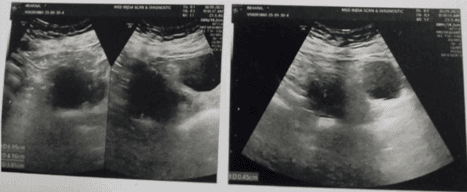

Fig. 1 Ultrasound of neck showing parathyroid adenoma in right inferior thyroid lobe.
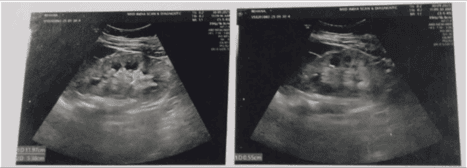
Fig. 1 Ultrasound of neck showing parathyroid adenoma in right inferior thyroid lobe.

Fig. 2 Ultrasound of the kidneys showing renal calculi in left kidney.

Fig. 2 Ultrasound of kidneys showing left kidney upper pole renal calculus.
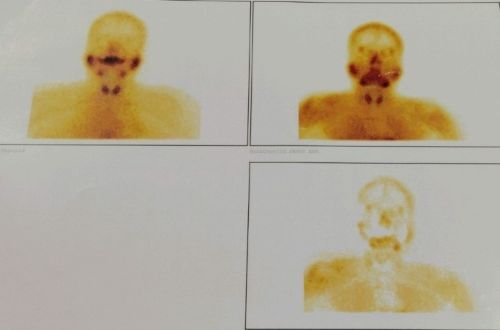
Fig.3 Technitium 99m Sestamibi Parathyroid scintigraphy scan suggestive of functioning parathyroid adenoma with no tracer uptake post parathyroidectomy

Fig.3 Technitium (Tc) 99m Sestamibi Parathyroid scintigraphy scan suggestive of functioning parathyroid adenoma with no tracer uptake post parathyroidectomy.

In view of worsening renal function, oligo-anuria, pulmonary oedema and persistently elevated serum calcium level, she underwent 1 session of hemodialysis with a high flux dialyzer through the right femoral uncuffed double lumen dialysis catheter with a low calcium dialysate bath. She improved well with serum calcium levels dip from 20mg/dl to 15mg/dl then 9.5 mg/dl. She underwent parathyroidectomy after preoperative assessment and clearance for surgery and the Histopathological examination(HPE) of gland showed nuclear pleomorphism with condensed chromatin with fibrous septation, thick-walled vessels with areas of hemorrhage suggesting parathyroid adenoma. She improved over the course of treatment with normalization of renal functions, urine output, serum calcium (8.5mg/dl), serum amylase (71 U/l) lipase (106 U/l), PTH (195 pg/ml). She was diagnosed as severe hypercalcemia due to PHPT secondary to functioning parathyroid adenoma with acute pancreatitis, renal calculus, seizure and acute kidney injury needing dialysis for control of hypercalcemic crisis, recovering post parathyroidectomy. She was discharged in a stable condition condition with advised treatment and follow up.

Primary hyperparathyroidism (PHPT) is usually asymptomatic and routinely detected on biochemical evaluation. Parathyroid/hypercalcemic crisis is a rare, severe life-threatening complication of PHPT defined as serum calcium greater than 15mg/dl (> 3.75 mmol/L) with signs and symptoms of acute calcium intoxication{7}. Shearer et al showed in their case series of 880 patients with PHPT, acute pancreatitis was documented in only 0.23%{8}. Bess et al from Mayo clinic did a retrospective analysis of 1153 patients with proven PHPT in which 17 (1.5%) patients developed acute pancreatitis{9}. Carneille et al retrospectively analyzed 1435 patients operated for PHPT, out of which 1224 patients were histo-pathologically proven and cured of PHPT with 211 patients having renal PHPT{10}. The incidence of pancreatitis was 3.2% (40 patients) with all patients having significantly higher calcium levels compared to those that did not develop pancreatitis. There was no episode of pancreatitis in patients with renal PHPT with low serum calcium and high PTH levels {10}. According Kelly et al and Carneille et al, moderate to severe levels of hypercalcemia were more prone to develop pancreatitis than those with normal calcium or mildly elevated calcium level in the setting of PHPT {10,11}.

In our case, patient presented with hypercalcemia related pancreatitis, renal calculi, acute kidney injury and seizure. There are three possible mechanisms whereby hyperparathyroidism can cause pancreatic damage. First, due to necrosis of pancreatic parenchyma by excess PTH. Second, by precipitation of calcium in pancreatic ducts causing ductal obstruction leads to secondary pancreatitis. Lastly, increased concentration of ionic calcium in serum leads to excess of calcium ions in pancreatic juice, which in turn accelerates conversion of inactive trypsinogen to active trypsin, resulting in pancreatitis {12}. Calcium free dialysis proves favorable adjunct for rapidly correcting severe hypercalcemia with life threatening cardiac complication, renal failure or any other manifestation that contradicts intravenous hydration.

Early diagnosis and prompt treatment of hypercalcemic crisis due to parathyroid storm by calcium free/ low calcium dialysate hemodialysis is effective and helps to control severe hypercalcemia early and prevents acute life-threatening complications. Medical therapy should be followed by urgent parathyroidectomy which remains a cornerstone of management in hypercalcemic crisis due to PHPT{13}.  


Kewords